Written and reviewed by Bc. Petr Kučera, MSc., MBA
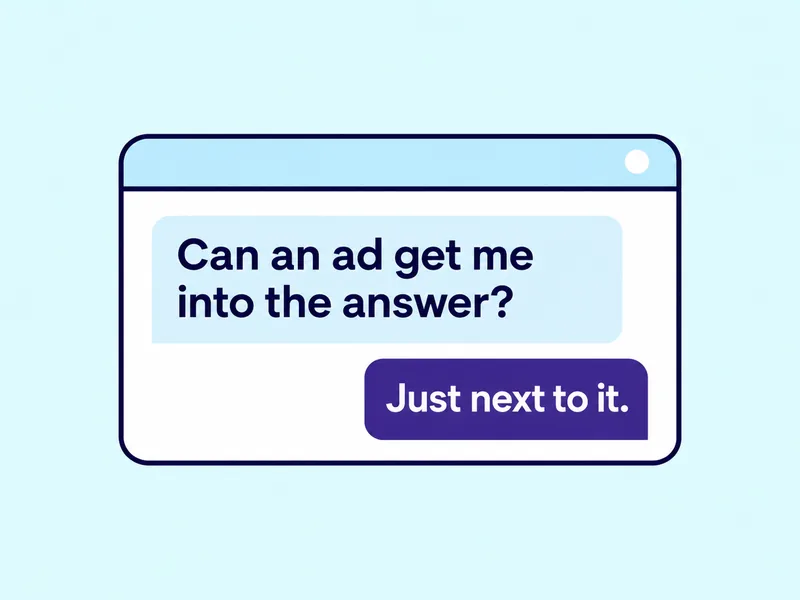
Pay for an ad in ChatGPT and you get a spot next to the answer, not in it. Getting your company into the answer itself takes a different route, and that is exactly what “AI SEO” and GEO proposals promise.
GEO (generative engine optimization) means optimizing for search engines that generate answers with AI. We checked which of these promises are backed by Google, OpenAI, Microsoft and independent studies, which come from tool vendors, and which a primary source explicitly rejects.
AI Overviews are summaries Google generates above the search results, and AI Mode is its conversational mode. Both run on Google’s regular index and ranking systems.
The page must be eligible to show in Search with a snippet, the short excerpt under the link. Google, 10 July 2026
Opting out removes the site from AI Overviews, AI Mode and generative AI features in Discover, without affecting classic Search. Available to everyone since 31 August 2026. Help page
Query fan-out: for a single query, the system may run several related searches across subtopics. Source: Google.
An AI Overview appeared for 13.7% of all queries and 64.7% of questions, according to Xu, Iqbal and Montgomery (13 March to 21 April 2026, arXiv). In Ahrefs data from 15,000 prompts (August 2025), only 12% of links cited by ChatGPT, Gemini and Copilot were in Google’s top 10; for Perplexity, almost one in three. Ahrefs sells SEO tools.
ChatGPT search provides answers drawn from the web and links to sources. OpenAI runs several crawlers, and each has a different job. Overview of OpenAI crawlers
OAI-SearchBotAllowOAI-SearchBot determines visibility in ChatGPT search. Blocked sites cannot appear in answers; at most, they may appear as navigational links.
GPTBotYour callOnly controls whether your content is used to train models. Blocking it doesn’t affect visibility in ChatGPT search.
ChatGPT-UserNot for searchFetches a page when a user asks; not an automatic crawler. Doesn’t decide inclusion in ChatGPT search.
OAI-AdsBotAllow for adsChecks ad landing pages and their relevance. Its data isn’t used to train models.
User-agent: GPTBot
Disallow: /

User-agent: OAI-SearchBot
Allow: /
Common mistake: blocking both GPTBot and OAI-SearchBot just to be safe. You then drop out of ChatGPT search, except for navigational links. OpenAI applies robots.txt changes within roughly 24 hours.
Anthropic, the company behind Claude, splits the work the same way. All three crawlers follow robots.txt. Anthropic help center
Claude-SearchBotAllowCrawls the web to improve search result quality. If you block it, Anthropic won’t index your content for search.
ClaudeBotYour callCollects content that may be used to train models. Blocking it signals that your site’s future content should be excluded from training.
Claude-UserAllowFetches pages when a Claude user asks about them. If you block it, Claude can’t retrieve your content for an answer.
User-agent: ClaudeBot
Disallow: /

User-agent: Claude-SearchBot
Allow: /
Four points, straight from the operators themselves:
AI visibility work starts here. Checking robots.txt, the firewall, indexing and snippets is cheap, and these checks determine whether the rest can work. If OAI-SearchBot is blocked, neither content nor a GEO package will help. A vendor who starts by writing content “for AI” without these checks is spending your budget in the wrong order.
Adding source citations, quotations and statistics raised visibility in a generative engine by roughly 40%, according to Aggarwal et al.
GEO is oversold as a standalone method. Its most quoted number, +40%, comes from a lab with GPT-3.5 over 5 Google results, and for sources in position 1 the effect was negative. The practical takeaway is ordinary good writing: sources, numbers, your own point of view. Write for people and for Google; AI visibility is a bonus.
Two studies look at how public brand mentions relate to mentions in AI. Both measure correlation, not causation.
Spearman correlation. Source: Ahrefs
Google search interest in a brand was the strongest signal of how strongly models recommended it. The authors explicitly say the relationship isn’t causal. arXiv
Correlation ≠ causation. Well-known brands may get more mentions and more recommendations for the same underlying reason. Google ignores efforts to generate inauthentic mentions. Authentic mentions make sense for the brand itself, but no one can promise an effect in AI.
According to OpenAI’s approach to advertising, ads don’t influence ChatGPT’s answers and are always kept separate and labeled. That is a company statement, not an independent audit. Two vendor measurements don’t contradict it.
50,006 commercial prompts in the US, on a single day: 23 July 2026. It’s a one-day snapshot, and SE Ranking sells AI visibility tracking. See the study
91 pairs of the same query and brand, once with an ad and once without, from 8 March to 12 April 2026. The ad didn’t raise the chance of a mention. Nile sells visibility in AI shopping. See the study
Why it matters: three cases from abroad, each measuring something different. For Andy Brice, the unpaid mention had the higher conversion rate. Octolens reports more signups without giving the number of unpaid visits, and Whole Whale shows no big difference in engagement.
Charlotte Schmitt recommends spending your budget first on getting AI to cite your company. Octolens itself sells monitoring of brand mentions in AI.
Engagement was almost identical. Whole Whale itself provides ad services.
You can’t pay your way into the answer, and that’s a good thing. Ads in ChatGPT are a paid channel like any other; a place in the answer is earned with content and your brand. On top of that, Andy Brice’s unpaid traffic converted at 4.2%, against 0.46% from the ad. Anyone who promises you a mention in the answer in exchange for ad budget is selling you something that doesn’t exist.
Related: ChatGPT ad results | How PPC campaigns work
In its guide to generative AI features, Google lists tactics you don’t need or that it ignores. We compared them with what shows up in proposals.
If a vendor offers any of the items highlighted in red as its main service, ask which primary source supports it.
Impressions in AI Overviews, AI Mode and generative AI features in Discover, broken down by URL, country and time, and by device for Search. Available to all sites since 31 August 2026. When we checked on 12 August 2026, it wasn’t available in the API.
Google Search Central blogIt has shown citations in Copilot, Bing and partner AI services since February 2026. Citation Share has been available since 16 June 2026; Microsoft describes it as an observed metric, not a ranking system.
Bing Webmaster BlogChatGPT adds this parameter to its links, so these visits show up in analytics. A mention without a click stays invisible to your own analytics.
Server-side trackingYour own question set is a thermometer, not a KPI, and anyone who sells it as performance is confusing exposure with business results. It tells you whether you show up for a few chosen queries. It doesn’t tell you how many people ask them or what you gained, and even Microsoft calls its Citation Share an observed metric, not a ranking system. Search Console and visits with utm_source=chatgpt.com show exposure and clicks; budget decisions belong to the leads and revenue those visits bring.
OpenAI FAQ for publishersGrowth in ChatGPT visits on the same site, January to May 2026 (whole site 5.7×). The placebo test came out at p = 0.16, and the authors themselves call the result “suggestive, not conclusive” (Watanabe and Nakayashiki). Much of the growth is explained by the platform’s own growth. Anyone who shows you a lift after “AI SEO” should also show you the pages they didn’t touch.
LLM traffic had a lower conversion rate than traffic from traditional channels, including organic search, except paid social. Source: organicllm.org
Newer results look better for AI, but they come from vendors or use a different baseline.
94 online stores, 2025, 9.46 million organic sessions. Source: ALM Corp
US retail, July 2026. No comparison with organic. Via Digital Commerce 360 and Pixis
An open question, not a fact. There is no independent consensus, and Kaiser and Schulze’s data only run to July 2025. The claim that AI visits convert better than organic can’t be confirmed yet.
Czech data is limited.
In two research reviews as of 29 September 2026, we found no independent Czech study of citations in ChatGPT, Perplexity, Gemini or Seznam Asistent.
You don’t need a special Czech AI strategy. You need Search Console set up properly. Google had 79.33% of Czech search in August 2026, and since 31 August 2026 every site can see its AI Overviews and AI Mode impressions. Bing, at 3.93% in August 2026, is a complement. Treat Marketing Miner’s May 2025 data as a starting point, not a basis for decisions. Your own site data outweighs anyone else’s study of the Czech market.
According to Google, the usual basics apply: indexing, technical access and useful content. The services that make sense are an access audit, content and PR work, and tracking through Search Console, Bing and UTM. How we run this work as a monthly service is described on the PPC ONE SEO content page.
Based on the available data, no. OpenAI states that ads don’t influence answers. In SE Ranking’s one-day US measurement, the advertiser’s domain was among the answer’s sources above its ad in only 3.63% of placements, and Nile found no increase in the chance of a mention. Both companies sell AI visibility tools.
No. Google says llms.txt “will neither harm nor help,” and it doesn’t require special schema.org markup for generative search. Structured data still makes sense for rich results.
OAI-SearchBot. Sites that block it don’t appear in ChatGPT search answers; at most, they may appear as navigational links. GPTBot only controls training. OpenAI applies robots.txt changes within roughly 24 hours.
In Search Console, in the Generative AI performance report, which has been available to all sites since 31 August 2026. It shows impressions.
ChatGPT adds the utm_source=chatgpt.com parameter to its links, so you’ll see its visits in analytics. A mention without a click won’t show up in your own analytics.
In the lab, yes, with caveats. The KDD 2024 experiment measured roughly 40% higher visibility after adding citations, quotations and statistics, but on an engine running GPT-3.5 over 5 Google results, and for sources in position 1 the effect was negative. The authors also tried the method on Perplexity (up to +37%), but uploaded the sources as files. That makes it a controlled test, not a measurement of live search.
Getting “AI SEO” or GEO proposals and unsure what supports them? We’ll review what blocks crawlers on your site and what makes sense to measure. We can’t promise an AI mention. We can clear the obstacles.
Contact us
About the author
Bc. Petr Kučera, MSc., MBA
CEO & Performance Strategist, PPC ONE
Petr discovered the power of performance campaigns back in 2011, and they have been an inseparable part of his professional life ever since. His edge comes from working with more than a hundred companies.
Data verified as of 29/09/2026, Anthropic crawlers as of 15/10/2026.




 80 client reviews