
 June 9, 2025
 How Facebook, Instagram and TikTok Are Evolving in the Czech Republic, and the Trends to Watch
Article Contents
- User numbers and user activity
- The evolution of content formats and organic reach
- The effectiveness of paid promotion on individual platforms
- Differences by service type (B2C vs. B2B, industry specifics)
- New trends for service businesses
- Summary and recommendations for companies in the service sector
- Frequently asked questions (FAQ) about social media
Social media in Czechia has reached a stage where platforms are no longer competing mainly for new users. They are competing for attention. Facebook remains the biggest mass-reach channel, Instagram continues to grow quickly and TikTok is moving into adult audiences. Across all three platforms, the strongest forces are now short video, artificial intelligence and community building, not simple “post and sell” communication. Service companies that invest this year in authentic video, a smart mix of organic and paid reach and genuine dialogue with their audience will gain a competitive edge. Here are the latest statistics.
User numbers and user activity
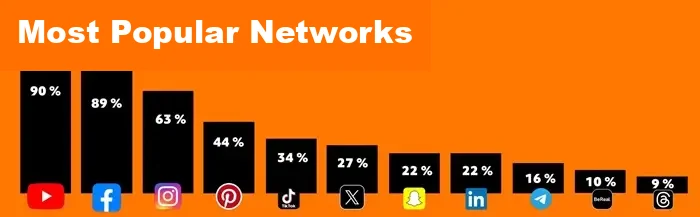
The most popular social networks in the Czech Republic by share of the internet population are shown in AMI Digital Index 2024. The figures show that YouTube and Facebook reach around 90 %, Instagram around 63 %, Pinterest around 44 %, TikTok around 34 % and so on.
- Social media penetration: At the beginning of 2024, around 8.05 million people in Czechia had an account on at least one social network, equivalent to 76.7 % of the total population. At the beginning of 2025, the figure was similar, at around 7.99 million accounts, or 74.8 % of the population. This change is more likely to reflect an adjustment in calculation methodology than a real decline. The Czech Statistical Office states that in 2024, 63 % of Czechs aged over 16 used social media, around 5.5 million people. That share has risen by 9 percentage points over the past four years, from 54 % in 2020 to 63 % in 2024. In other words, user growth is slowing because social media is already close to population saturation.
- Demographics: Social media is no longer the preserve of the youngest audiences. It is used daily by 80 % of Czech internet users across generations. People aged 16-24 are, unsurprisingly, the most frequent users, with usage reaching up to 99 % in this group. But social media is also used by 73 % of people aged 45-54. Seniors aged 55+ are moving onto social platforms as well, with almost two thirds of people over 60 using them daily, although penetration among those aged 75+ is still only 6 %. Facebook is therefore far from "dead" among older audiences. Four out of five Czechs over 18 open it at least once a week. Overall, 56 % of Czechs aged 16+ can be reached on Facebook every day. Instagram has daily reach of around 25 % and weekly reach slightly above 40 % of the adult population. TikTok is used weekly by 16 % of adult Czechs, but among people aged 18-35 that already means one in three. By number of accounts, the largest platforms in the Czech Republic include YouTube, at around 90 % of the internet population, Facebook at around 87-89 % and Instagram at 63 %. With an estimated share of around 34 % of the population, including under-18s, TikTok has entered the top five most popular networks. Its growth over the past year, however, was slower than Instagram's, and even Pinterest's. This suggests that Instagram is still gaining new users dynamically in Czechia, by several percentage points a year, and is catching up with Facebook in activity, while TikTok is mainly consolidating its younger audience.
- Time spent on social networks: The average Czech user aged 18+ spends a little over 1 hour a day on social media. According to the AMI Digital Index survey, daily time spent fell slightly from 147 to 144 minutes between 2023 and 2024, probably because older age groups, who spend less time online, became more represented. Another source recorded a year-on-year increase of +1 % in daily time spent. In principle, time spent on social media remains consistently high. Generation Z users have the highest figures, at around 3.5 hours a day among people under 27. People aged 55+ spend an average of 50 minutes a day on social media, although for them this represented a year-on-year increase of around 5 %. Users now visit social networks more often, but in shorter sessions, which fits the broader trend toward shorter content consumption.
- Organic interaction and engagement: As the volume of content grows across platforms, users are becoming much more selective about what deserves their attention. This is no longer passive scrolling. People follow fewer pages and interact only with content that gives them genuine value, whether that value is entertainment, inspiration or education. For businesses, this means that maintaining organic reach and engagement is harder and requires high-quality, relevant posts. If a company profile only comes alive when it wants to sell, users quickly tune out. By contrast, building a relationship with the audience through community and dialogue is becoming essential for strong organic interaction, as discussed below. Overall, in 2024-2025, organic reach for standard posts is declining. For example, the average organic reach of a Facebook page is around 2-5 % of fans, and around 4 % on Instagram. Most posts without paid support reach only a fraction of the audience. The exception is content that algorithms evaluate as highly interesting or viral. There is still a chance to break through organically to a wide audience, especially with formats such as Reels and TikTok, as the next section explains.
The evolution of content formats and organic reach
- The dominance of short videos: The main content trend of 2024-2025 is the continuing "TikTokification" of social media, meaning the shift toward short, dynamic videos built around entertainment and simple messaging. Viral short videos have spread from TikTok to Instagram and Facebook as Reels, and they are even entering professional networks, with the vertical video format "knocking on LinkedIn's door". Platforms prioritize video content in their algorithms because it holds users' attention for longer. In 2024, for example, Instagram again extended the maximum length of Reels and gave them algorithmic space to achieve above-average reach compared with other formats. The goal is to keep users in the app for as long as possible, because longer viewing means more time spent. For businesses, this means video, both short and longer form, is essential for maximizing organic reach. The marketing recommendation still stands: make videos, ideally short ones. At the same time, Instagram and other networks are experimenting with longer videos and hybrid formats, such as video podcasts, to offer more varied content and keep different target audiences engaged. Vertical videos are particularly effective at capturing attention. According to marketing study data, 90 % of vertical videos, including Reels, TikToks and Shorts, have a higher completion rate than horizontal formats. Overall, 38.8 % of customers consider short videos the most relevant content type, the highest share of all formats.
- Reels, Stories vs. classic posts: Over the past year, Instagram and Facebook feeds have changed noticeably. Reels have flooded users' feeds and become an effective way to reach people who do not yet follow a profile. Reels can still achieve 2x more views than static posts because Meta strongly favors them. However, as the format has become more crowded, their organic reach is no longer as "endless" as it seemed in the early days. According to one analysis, the average reach of Reels fell by around 50 % in 2023 compared with 2022. Even so, they remain the strongest organic format on Instagram. Classic photo posts and links record significantly lower reach and often struggle without paid support. Stories remain popular for everyday content, but they are used more to maintain a relationship with existing followers than to reach new ones. Their strength lies in interactivity. Polls, quizzes, questions and other Story tools make it easy to draw the audience in and collect feedback. For service-sector companies, Instagram Stories can be an excellent relationship-building channel, for example for quick questions, polls about customer preferences, behind-the-scenes glimpses and similar content. Reels and TikTok videos, meanwhile, help reach new potential customers through entertaining or useful content. The format mix matters as well. Experts recommend combining more permanent feed content, such as educational infographics and testimonials, with short, authentic behind-the-scenes Reels, so the brand feels both human and expert.
- Authenticity and content quality: In an era of content overload, the winners are those who offer authentic, valuable content. Users quickly recognize obvious advertising and generic posts, and they give them less and less attention. By contrast, content they can identify with, such as real customer stories, a look behind the scenes or examples of everyday work, builds a much stronger relationship with the brand. Brands should therefore focus on quality over quantity. Instead of overwhelming the audience with four average posts a week, it may be better to publish one excellent, well-thought-out post. Interactive elements and calls to participate also help increase organic reach. People respond more readily to content that brings them in, including competitions, Q&A, "challenge" formats and similar content. On TikTok, for example, a proven strategy is to support UGC by inviting users to create content, such as through popular hashtag challenges, and then sharing or amplifying their creations. Overall, viral potential depends more on creativity and relevance than on the size of the follower base. Thanks to algorithmic distribution, even a profile with very few followers can reach thousands, or hundreds of thousands, of users if its content fits current trends and audience interests. Companies should therefore avoid chasing followers for its own sake. What matters more is creating content people genuinely want to watch and share.
The effectiveness of paid promotion on individual platforms
- The role of paid promotion: Given limited organic reach, it is increasingly important for businesses, both B2C and B2B services, to support key content with paid promotion. Social networks have long operated on a "pay-to-play" model, especially Facebook, where company posts reach only a fraction of fans without advertising. Meta, meaning Facebook and Instagram, remains the dominant advertising ecosystem in 2024/25. Globally, it accounts for more than two-thirds of social ad spend. For example, in the United States in H1 2024, more than USD 75 billion went to Facebook and Instagram, more than 2/3 of all social advertising spend. In Czechia, a significant share of budgets also goes into Meta advertising because these platforms offer broad reach across age groups: Facebook reaches more older users, while Instagram reaches younger adults. For the service sector, where the objective is often trust building rather than an impulse purchase, Meta ads are also suitable thanks to advanced targeting. It is still possible to target a specific audience relatively precisely, for example by location, demographic or interests. The question is how long this will remain possible, as regulatory pressure to limit microtargeting is increasing. With its extensive user data, Facebook long allowed extremely detailed targeting, for example "a 30-year-old single mother from Karviná interested in horse riding", but some sensitive categories may disappear from advertising tools in the future. Even so, advertising on Facebook and Instagram remains highly effective for both brand building and performance, from promoted posts and lead ads that collect contacts, for example for consulting firms or educational courses, through to locally targeted campaigns, such as for healthcare clinics or real estate agents in a specific region.
Example of the Meta Ads interface
- Instagram vs. Facebook: Instagram Ads have become more important in recent years and, in many fields, including fashion services, beauty, gastronomy and travel, they can be more effective than Facebook. This is mainly due to the platform's visual nature and higher engagement among younger audiences. Instagram is catching up with Facebook in user numbers in the Czech Republic, so it is no longer just an add-on channel. It is a fully fledged platform in its own right. Global data shows that the average engagement rate on Instagram is higher, and formats such as Reels Ads and Stories Ads can deliver excellent results in click-through rates and brand awareness. On Facebook, link ads, or Click-To-Website campaigns, and video spots for broad reach still work well, especially when you also need to reach the 40+ age group. For B2B services, which often need to reach a narrowly defined audience of managers or companies, Facebook may be more suitable because its audience is older. Not all decision-makers are active on TikTok or Instagram. Cost per click and CPM vary by industry, but in general they are rising in 2024. As advertiser competition grows on Instagram Reels, the earlier advantage of lower prices is gradually disappearing. Still, a well-optimized paid campaign, using the right format and targeting, can deliver measurable results and return on investment on Meta platforms.
- TikTok advertising: TikTok Ads established itself during 2024 as the third major player. The number of advertisers on TikTok is growing and the platform is improving its advertising options. It has introduced formats such as Spark Ads, which allow brands to use creators' organic content and amplify it with paid support. TikTok's advantage is still its relatively lower ad saturation compared with Meta, which can mean more favorable CPM and a more receptive audience. Users tend to perceive ads as part of the feed, similar to creator content. Some services, such as educational courses or financial advice for young people, report surprisingly good responses from TikTok campaigns thanks to creative execution. The drawback is that TikTok advertising requires a specific creative approach. A classic corporate spot will not work here. Brands need authentic, entertaining creative that fits the platform's trends. Conversion behavior on TikTok is also different. Users are less likely to leave the app for an external website, so for B2B companies focused on leads, it may be more effective to use TikTok primarily to increase awareness or guide users toward interaction within the platform. Overall, however, the effectiveness of paid promotion on TikTok is growing, and more companies, including service providers, are testing how to reach a new generation of clients on this network.
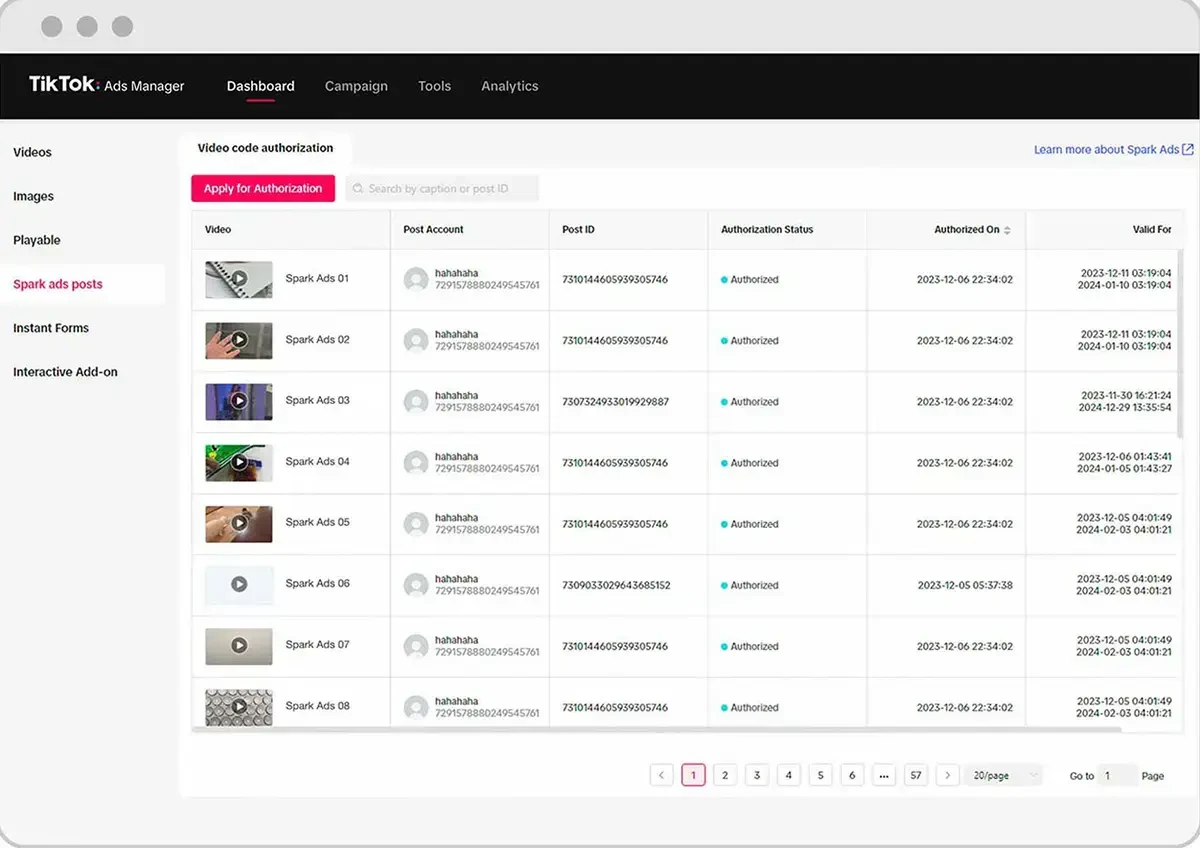
Example of the TikTok Ads interface
- Year-on-year performance comparison: Looking at the overall trend, advertising prices are generally rising, meaning reach costs are inflating, while performance is slightly declining. This forces advertisers to optimize and look for new routes. On crowded Facebook, click-through rates are falling in many industries, while Instagram and TikTok offer higher engagement. For example, video ads on Instagram and TikTok generate more comments and shares than static formats. Companies in the service segment should compare ROI across platforms. For the same budget, do they get more enquiries from Facebook Lead Ads or from a campaign built around an influencer video on TikTok? One interesting finding is that influencer marketing, whether organic or barter-based rather than purely paid advertising, has become part of B2B companies' budgets as well. More on that appears in the trends section. In general, though, Meta remains the foundation of paid campaigns, while TikTok is positioning itself as an add-on that can perform strongly in some segments, or fail if the content misses the mark. The key is to test and measure. Each platform can deliver different results depending on the nature of the service and the target audience.
Differences by service type (B2C vs. B2B, industry specifics)
Social media can work successfully across different service industries, but strategies and suitable formats vary. Although detailed public data by industry is not widely available, several patterns and proven approaches can be identified:
- Education and coaching: Companies providing courses, training or personal development make extensive use of video content. Short videos showing "free" tips, for example language schools offering mini-lessons on Instagram Reels or TikTok, or a career coach sharing a trick of the week, can capture attention and attract an audience that later converts to paid services. Community building is also typical for the education sector, including Facebook groups for students, live Q&A streams and discussions under posts. Online language courses in the Czech Republic, for example, often have a Facebook group for students where lecturers answer questions and maintain engagement. Instagram is suitable for visually attractive tips, such as vocabulary infographics or motivational quotes, while TikTok works well for viral educational sketches. Paid promotion here mainly targets interests, such as personal development or study, and age. Language courses for teenagers, for example, are more likely to use Instagram and TikTok, while courses for professionals may rely more on Facebook and LinkedIn.
- Healthcare and wellness: Trust and expertise play a major role here. Many clinics, doctors and fitness trainers use Facebook for regular communication, such as posts explaining procedures or answers to questions in comments, because Facebook is popular among older and middle-aged generations, who use healthcare services the most. Instagram is effective for before/after examples, educational health infographics and client or doctor stories, including Stories from the practice and Reels with quick health tips. TikTok is slowly finding its place in this industry as well. Young doctors and medical students in the Czech Republic have started making popular videos debunking myths about vaccination, while physiotherapists show exercises and similar content. These formats can increase awareness and the prestige of a practice. For sensitive topics such as health, however, authenticity and expertise are crucial. Services must communicate sensitively and avoid sounding like a "cheap show". Paid advertising in healthcare is often restricted by regulations, but it is possible, for example, to promote posts with expert content or target a local area, such as "Brno area, women 25-45 interested in cosmetic services" for an aesthetic clinic.
- Real estate and financial services: Sectors such as real estate, insurance and financial consulting have traditionally relied heavily on personal contact and trust building. On social media, a combination of expertise and personal branding has proved effective. Real estate agents in the Czech Republic, for example, often run YouTube channels with video tours of properties and then share those videos on Facebook. They use Instagram to present lifestyle and brand content, such as attractive interiors, handing over keys to satisfied clients in Stories and similar posts. Some progressive agents have also moved onto TikTok. Short tours of the "most interesting property of the week" or funny videos from the field can capture a broader audience. Financial advisors and lawyers are in a more sensitive position. They cannot easily "dance on TikTok", but they can use educational videos, such as quick legal tips on "what to do when..." or financial mini-advice in the form of subtitled Reels. This type of content builds an expert image and organically reaches people dealing with a specific situation. On Facebook, experts can also enter specialist groups, for example groups for real estate investors or parents dealing with mortgages, and contribute advice naturally. This helps them build a name and win clients. The financial and legal services industry benefits more from LinkedIn for B2B networking, but Facebook and Instagram work better when communication is personified through the expert's personal brand. Paid advertising in these fields targets life situations, for example promoting a "mortgage refinancing" service to users aged 30-45 who recently changed marital status. Here again, Facebook stands out because of its data. In real estate, Instagram can be used for beautiful visuals of homes with a click-through to the website, and Instagram already enables formats for real estate catalogs as well.
- Consulting, advisory and B2B services: These companies, such as IT consultancies, marketing agencies and law firms, traditionally rely mainly on LinkedIn and personal networking. Facebook and Instagram, however, can support HR marketing, recruitment and employer brand building by showing company culture through photos and videos from company life, introducing the team and similar content. Some consulting firms also run Facebook pages focused on community, sharing articles and discussing current trends. Instagram works for B2B services when handled visually. A consulting firm, for example, may share infographics with survey data, short video insights from the CEO and similar content. Few B2B companies use TikTok so far, but exceptions exist. A technology startup might use TikTok to show innovative company culture and attract young talent, or a lawyer might try to popularize law among young people through lighter videos. The key is to evaluate whether the service's target audience is on the given network. Business owners and managers, for example, are more likely to be reached via Facebook, where they are present as private individuals, or LinkedIn. A broad consumer audience, such as self-employed people looking for accounting services, can also be reached with a humorous TikTok video that points to a free consultation. In B2B, influencer marketing usually means a partnership with respected experts, such as a well-known economist promoting a consulting firm's conference on his Facebook page. Data shows that the B2B sector is beginning to warm to influencers. Globally, 85 % of B2B marketers used some form of influencer collaboration in 2023. In the Czech Republic this is not yet as widespread, but the trend is moving upward.
New trends for service businesses
This year brings several key social media trends that matter for companies in the service segment, from local B2C providers to large B2B consultancies:
- Continuing "TikTokification" of content: Short, brisk videos focused on entertainment will continue to dominate feeds. All platforms, including those that have so far been more conservative, are expected to adapt to TikTok's style. Content will increasingly be distributed by topics and interests rather than by followed pages. This means that even a new or smaller profile can gain major reach if it creates trending content. For companies, the challenge is to create concise, engaging and funny content with viral potential. At the same time, platforms will try to keep users for longer by supporting longer videos, video podcasts and similar formats to broaden target groups. Generation X, for example, tends to prefer longer formats to 10-second clips. Video formats of all kinds, from 10-second Reels to hour-long interviews, will therefore be key.
- Emphasis on community and engagement vs. selling only: Marketing is shifting away from one-way "push" activity, such as advertising and calls to buy, toward community marketing. People do not want to be just customers. They want to feel they belong to the brand as if to a club. An active online community, such as a Facebook fan group, a community around brand influencers or a discussion forum, is proving to be key to loyalty. 85 % of marketers say that building an online community is absolutely essential for success. For businesses, this means investing more in dialogue with followers: responding to comments, ideally both publicly and in private messages, creating posts that invite discussion and appreciating the most loyal fans, for example by announcing a "fan of the month". This approach strengthens the relationship and keeps the audience's attention even when you are not selling anything. Community marketing is especially valuable for services where trust and recommendations matter, such as healthcare, legal and advisory services. The time invested in community management, including replying and moderating groups, pays off through higher customer retention and word of mouth.
- AI-generated content and automation: Artificial intelligence (AI) has also changed social media management. In 2024, platforms began deploying AI tools in advertising systems and content creation. Meta, for example, integrated features for automatically generating ad variations, adjusting video formats from photos and similar tasks. For marketers, AI is a "new colleague". 75 % say AI helps them be more creative and 72 % confirm that content created with the help of AI performs better. This year's trend is to use AI for routine work: brainstorming ideas, writing draft copy, subtitling videos and generating clips. Tools such as Opus Clip, for example, automatically cut several Reels from one longer video. At the same time, AI is becoming more important in campaign optimization. Smart algorithms evaluate which creative works and show it more often. The pitfalls matter too. Experts warn that too much AI can destroy authenticity. If "one AI creates the content and another responds to it", the human element disappears and users will stop enjoying social networks. AI is therefore best used as an assistant, not as a replacement for the creator. Ideally, let AI help with ideas and efficiency, then humanize the final content with your own voice. Originality and a human tone may be even more valuable in 2025 because they counterbalance omnipresent generic AI content.
- Influencer marketing and creators in B2B and B2C: Collaboration with influencers remains on the rise, but its form is changing. In B2C services, such as travel agencies, beauty salons and gastronomy, it remains a popular way to gain credible recommendations. Companies, however, will pay closer attention to the ethics and reputation of the influencer. In 2024, stricter rules for labelling advertising collaborations came into effect, and companies are aware that a controversial influencer can damage their image. Going forward, more expensive collaborations can be expected, as influencer prices are rising with demand, along with a stronger emphasis on measuring results. Companies want to see clearly what their investment in an influencer has delivered. An interesting trend is the growth of influencer marketing in B2B. Companies that sell services to other companies are beginning to collaborate with industry personalities, for example a consulting firm partnering with a popular speaker on LinkedIn, or an IT company working with a YouTube creator who reviews technology. Globally, B2B influencer marketing is becoming a recognized discipline because decision-makers also follow content on social networks and trust recommendations from people they respect. For B2B services, this means considering collaboration with micro-influencers, or specialists, on expert content, webinars, interviews and similar formats. In short, creators' influence can strengthen a company's credibility and reach.
- Authenticity, UGC and social proof: In a flood of professionally prepared campaigns and AI-generated content, authenticity will be a competitive advantage for services. The mantra "Authenticity is the new luxury" applies. Users appreciate company communication that feels human rather than staged. This is also connected with the use of user-generated content (UGC). Companies increasingly share real customer experiences, photos and videos from clients, with their consent, of course. For services, this is the ideal form of a modern "testimonial". A restaurant can repost a guest's Instagram photo, a lawyer can record a video with client feedback if the nature of the service allows it, and a training agency can publish the story of a successful course graduate. UGC and authentic content generally build trust better than even the best advertising slogan. That is why the trend is to involve the community in content creation, for example through competitions for the best photo, requests for opinions that are later quoted in posts and similar activity.
- Social commerce and conversions directly on social networks: Although e-shops are a different segment, and excluded in the query, it is worth mentioning the trend that social networks are integrating more shopping functions. Social commerce, meaning purchasing directly in the app through features such as Instagram Shop and TikTok Shop, is gaining importance. Services are not typically "sold in a basket", but this trend is relevant to ticket sales, reservations, transport bookings, gift vouchers and similar purchases. Users are getting used to buying everything without leaving the social network. According to global forecasts, 69 % of marketers believe that by the end of 2025, social commerce will overtake classic web-based e-shops. For service companies, this means watching for ways to simplify conversion on social networks, such as using the "Book" button on Instagram, enabling service orders via a Facebook page or deploying simple chatbots to arrange appointments. Experiments are appearing even in B2B. A consulting firm, for example, may offer direct booking of an hour-long consultation through Instagram, using click-throughs in Stories to a pre-filled form.
- Other innovations and technologies: New technologies such as AR/VR on social media are also on the horizon. Instagram, for example, is testing AR filters for trying products, which could in the future also work for services such as a virtual hotel tour. The rise of Web3 and decentralized platforms does not yet play a mainstream role in the Czech Republic. Companies are focusing their energy more on the major existing networks. However, the revival of community networks is worth noting. Czech Seznam also announced that it will revive Lidé.cz as a platform for interest-based communities. All of this fits the trend of building smaller, closed communities as a counterweight to global mega-platforms.
Summary and recommendations for companies in the service sector
Based on the analysis above, the main findings and recommendations can be summarized as follows:
- Social media remains a key marketing channel - In 2024-2025, the use of Facebook, Instagram and TikTok in the Czech Republic continues to spread across generations. Facebook remains the largest network, with around 5-7 million active users, and cannot be ignored even in 2025. A company presence on Facebook "won't hurt", especially if you want to reach a broad population including older age groups. Instagram is growing fast, with around 63 % of the internet population already having an account, and is becoming the second main platform. We recommend investing in a high-quality Instagram profile if you target people up to around 45 years old. TikTok can no longer be treated as a novelty for teenagers. It has more than 2 million Czech users and is also entering the 30+ age category. A service business should consider whether it can present its brand creatively on TikTok, especially if it targets younger audiences aged 18-35. If so, it pays to be there before the competition.
- Short videos and Reels as the number-one content format - The "TikTokification" trend means short videos now rule every platform. Companies should adapt their content strategy by bringing video into the mix, including examples of the service in action, tips, interviews and case studies, and by using Reels on Instagram and Facebook and videos on TikTok for maximum organic reach. Classic text posts and links have minimal reach, so it is better to limit them or always add an attractive visual. It is also worth experimenting with video length. Very short clips capture attention and reach Gen Z, which "falls asleep during videos longer than 10 seconds", but informative content can easily be 60-90 seconds long, and Instagram now also has space for videos measured in minutes. The key is to hook viewers right at the start and maintain pace. Authenticity beats perfect production. A video shot on a phone with an honest delivery can get a better response than an overproduced ad. Do not be afraid to show the "more human face" of your service through video, such as an ordinary day in the office, a quick tip from an expert or an answer to a client question.
- Build community and dialogue, not just an audience - Social networks are no longer only for one-way promotion. They are mainly for building relationships with customers. An active community can become your competitive advantage. Fans become loyal ambassadors who spread your good name further. Create a Facebook group related to your field, hold regular livestreams or Q&A sessions, encourage followers to comment and respond to them, ideally quickly and with genuine interest. Show that you value feedback, for example by publishing a "comment of the week" or highlighting user-generated content. This shows that you care not only about selling, but about a real customer relationship. Community engagement is especially important for services where trust and recommendations decide, such as healthcare, legal and consulting services. The time invested in community management, including replying and moderating groups, pays off through higher customer retention and word of mouth.
- A smart combination of organic and paid content - Given the decline in organic reach, it is sensible to plan a budget for promoting posts. This does not mean sponsoring everything, but strategically supporting key content. For example, support content that is already resonating organically, meaning it has a high engagement rate, or content intended for a new target audience where you cannot be sure it will spread algorithmically on its own. On Facebook and Instagram, use advanced targeting, but prepare for possible future limitations on some categories and watch updates to advertising terms. Test different advertising platforms. For some campaigns, TikTok may deliver a better price/performance ratio, especially with younger target groups, while at other times Facebook will be more effective because it offers broader coverage and older audiences with higher purchasing power. Do not be afraid to try new ad formats, such as Spark Ads on TikTok, which are excellent for naturally integrating a product into creator content, or Reels Ads on Instagram, which can achieve very high viewership. The important thing is to measure results continuously, including CTR, conversions and cost per lead, and optimize budget distribution accordingly. By tracking KPIs, you can find out which network brings better enquiries. Do not be guided only by general advice. Use data from your own campaigns.
- Personalize content for your industry and target audience - When planning your strategy, take the specifics of your services into account. If you offer a visually attractive or experience-based service, such as a travel agency, event agency or design studio, the visual side will be key. Invest in beautiful photos, videos and collaborations with photographers or micro-influencers on Instagram. Conversely, if you have an expert service, such as accounting or law, alternate lighter content, for example industry memes that can spread, with useful advice and case studies that prove your expertise. You can publish these as a series of posts or documents and then turn the summary into an attractive video. Also consider the age and communication style of your target audience. Younger audiences appreciate quick, funny communication, even simple emoji reactions in Stories, while older or more conservative clients may prefer a more formal tone and longer explanation, which you can provide through a longer caption on a Facebook post supported by an infographic. Ask yourself: where does my ideal customer spend time, and what are they looking for on social media? Then adapt your content mix accordingly. Not every platform has to be a priority. Sometimes it is better to manage two properly than to be everywhere halfway.
- Use AI and new tools, but with sensitivity - Do not be afraid to use artificial intelligence to make work more efficient, from generating draft copy and translating posts to creating inputs for graphics and similar tasks. AI can save hours of time and provide inspiration when you are running out of ideas. Try new tools such as ChatGPT, for example to create an article outline or a series of posts, Canva with AI features such as automatic background removal, the aforementioned Opus Clip for creating Reels from a longer video and so on. At the same time, maintain control over tone and quality. Carefully review and refine everything AI prepares so the result matches your brand. Do not rely on autopilot. Instead, treat AI as a "partner" that makes your work easier while the final authorial touch remains yours. This preserves the authenticity and humanity of the content, which will be one of the main distinguishing features of successful communication this year.
- Track trends and learn from data - The digital environment changes quickly. Spend time continuously monitoring social media trends. Read trusted sources, such as Meta newsroom, TikTok blog and local media such as MediaGuru or MAM, so you know about new formats, including the rise of Threads from Instagram, new algorithm changes and so on. At the same time, trust your own data. Regularly analyze the performance of your posts and campaigns. You will discover which content types work best with your audience. For example, if a video case study has 3x more shares than a standard post, that is a signal that you should create more of them. Use Insights/Analytics and ask clients how they heard about you. Social media should have a clearly defined role in service marketing, such as raising awareness, generating leads or customer support, and should be evaluated as carefully as other channels.
In conclusion, this year will be especially about finding the balance between proven channels, with Facebook still the biggest mass-reach medium, and new opportunities such as TikTok, new video formats and communities for companies in the service sector. The emphasis is shifting toward authenticity, high-quality content and building customer relationships online. Companies that can draw on data while also being creative and helpful in their communication will have the upper hand on social media. Social networks remain a powerful tool, but the companies that succeed will be those that use them not only to sell, but to create an excellent customer experience and build trust in their brand.
Frequently asked questions (FAQ) about social media
- Which networks have the biggest reach in Czechia, and who are they suitable for?
-
Facebook and YouTube deliver broad reach across age groups. Instagram is growing quickly and is strong among younger adults, especially in visual industries and lifestyle. TikTok delivers high engagement, especially among 18-35s, and is excellent for short, authentic videos. For B2B and recruitment, do not leave out LinkedIn.
- Does it make sense to bet on short videos (Reels/TikTok/Shorts), or stay with photos and links?
-
Short vertical videos are among the strongest formats for reach and engagement. Use photos and links more as supporting content, such as testimonials, infographics and summaries. The ideal mix is Reels/TikTok for acquisition, Stories for relationships with existing followers and the feed for "evergreen" content.
- How often should you publish, and how long should videos be?
-
For services, 3-5 high-quality outputs per week usually work, with quality taking priority over quantity. Use short videos of 10-30 seconds for acquisition and 30-90 seconds for education and case studies. The first 3-5 seconds are key, meaning the hook, along with readable subtitles and a clear call to action.
- Organic reach is falling. How do you deal with it?
-
Bet on formats with an algorithmic advantage, such as Reels/Shorts, strengthen interactivity through polls, Q&A and competitions, and work with community through groups and comments. Support key content strategically with budget. Above all, promote what is already resonating organically.
- How should you split the budget between Meta (FB/IG) and TikTok?
-
Meta is usually the foundation because it offers broad targeting and reaches different age groups, while TikTok should be tested for younger audiences and creative concepts. Start with a ratio such as 60-80 % Meta / 20-40 % TikTok and adjust according to KPIs, including cost per lead, conversions and quality of enquiries. Run an A/B budget test every quarter.
- Which KPIs should service companies track?
-
Short term: reach, video completion, ER (comments/saves), CTR and cost per visit/lead. Medium term: lead quality, meaning conversion rate to meeting/order, reach frequency and share of new vs. returning users. Long term: growth in branded searches and share of recommendations.
- I am B2B. Does Instagram/TikTok make sense for me if I have LinkedIn?
-
Yes, but with a purpose. LinkedIn is primarily for acquisition and authority, while Instagram/Facebook help with employer branding and the company's "human face", including culture, team and behind the scenes. Use TikTok selectively for recruitment or thought leadership in simple videos. Case studies and expert mini-tips are the foundation.
- How can you use AI without damaging authenticity?
-
Use AI for brainstorming, subtitles, clip selection and copy variants. Always humanize the final content with your own voice, real examples and client stories. AI is an assistant, not a replacement for the author. Keep a consistent brand tone and transparently label collaborations.
- Does influencer marketing work for services and B2B too?
-
Yes. Choose expert creators or micro-influencers with a relevant audience. Require measurability through UTM, codes or forms, and watch reputation. In B2B, webinars, interviews, joint case studies and LinkedIn collaborations work better than lifestyle posts.
- What types of content work for local services?
-
Short "day in the life" videos, including before/after, service process and quick tips, client testimonials (UGC), local topics and collaborations with local creators. Use geotags, local targeting and a call to action for reservation/booking directly from the network.
- How do you connect organic and paid content smartly?
-
Publish organically, track signals such as saves, comments and video completion, and support the best pieces with ads. Remarket to video viewers and website visitors, build sequences from educational content to an offer, and continuously rotate creatives and targeting based on data.
- What should you not forget from the perspective of law and platform rules?
-
Label commercial collaborations, respect GDPR, including consents, cookies and contact management, and follow platform rules for sensitive categories. For healthcare and financial services, communicate factually and without misleading claims. Keep evidence of consents and data sources.
Sources: In the analysis, we drew on the latest available data and studies on the Czech market, including reports from AMI Digital Index 2024 (STEM/MARK survey), data from the Czech Statistical Office, DataReportal 2024/2025 statistics, articles from media servers such as MediaGuru, MAM, Novinky and others cited throughout, and trend predictions from marketing agencies. The findings and figures listed therefore combine official statistics, surveys and practical industry experience. We hope this summary helps you better navigate the dynamic development of social media and use it to benefit your business in 2025.
CEO & Performance Strategist


 Fast
Fast  Effective
  Nonstop